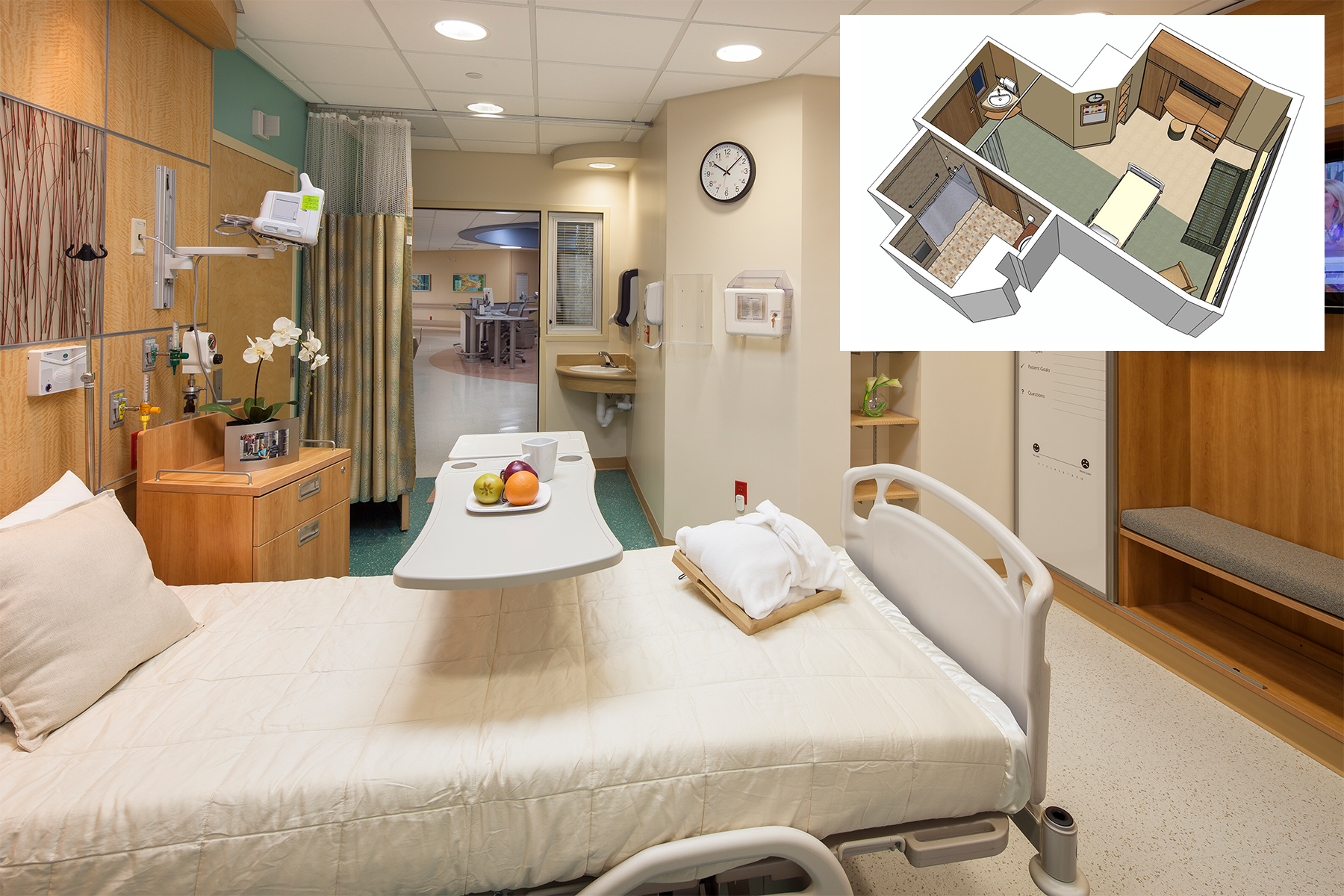
Healthcare facility projects fail in predictable ways. Rooms are designed before equipment requirements are understood. Infrastructure is sized too small, or in the wrong location. Departments are organized around assumptions rather than how clinical teams actually work. By the time these misalignments surface, they are expensive to correct and disruptive to schedules that have no room to absorb them.
The root cause is often the same: medical planning and equipment planning are treated as separate engagements, handed off in sequence rather than developed together. For healthcare owners managing complex capital programs, regulatory timelines, and the operational reality of facilities that cannot simply shut down, that disconnection carries real risk.
Integrated design teams address this at the start, not after the fact. Medical planners and medical equipment planners are embedded members of the core design team, working alongside architects and engineers from programming through construction. Decisions about space, workflow, technology, and infrastructure are made together,in the same room, against the same set of operational goals.
What Medical Planning and Equipment Planning Actually Involve
Medical planning is the discipline of designing healthcare environments around how care is delivered. It encompasses workflow mapping, department adjacency, patient flow, staff circulation, and the translation of clinical operations into functional space. A skilled medical planner understands not just square footage but the operational logic that determines whether a unit runs efficiently or constantly works against itself.
Medical equipment planning extends that thinking into the physical and technical systems that make care possible. It covers the selection, placement, and infrastructure coordination of clinical equipment across every room in a facility, from imaging suites and procedure rooms to exam rooms and nurse stations. Equipment planners manage vendor coordination, confirm infrastructure compatibility, track lifecycle costs, and ensure that what is specified can actually be installed, commissioned, and maintained in the space designed to receive it.
When these disciplines operate separately, the gaps between them become project liability. When they operate as a unified team, they become a project asset.
Planning Around How Care Is Actually Delivered
Every layout decision in a healthcare facility either supports or undermines clinical performance. Staff travel distances, supply access, sightlines from nurse stations, the relationship between clean and soiled utility rooms: these details are not incidental. They determine how much time nurses spend walking versus caring, how quickly teams can respond, and how consistently care protocols are followed.
Both medical planners and medical equipment planners collaborate directly with clinical teams to map workflows, test scenarios, and organize departments around operational relationships rather than arbitrary adjacencies. Equipment is planned as part of the room from the beginning, not positioned after layouts are fixed. Infrastructure is sized and located based on actual demand.
At Keesler Community Hospital, this approach produced measurable results. Following Hurricane Katrina's devastation of the existing facility, RLF led a comprehensive rebuild grounded in evidence-based design and patient-centered planning. A more compact inpatient floor plate reduced staff travel time significantly. Strategic placement of nurse stations, supplies, and support spaces increased direct patient care time and contributed to shorter average lengths of stay. The rebuilt facility consistently earned the highest inpatient satisfaction ratings in the Military Health System and was designated the Air Force Surgeon General's Hospital of the Year in 2017.
Designing Rooms That Work for the People Inside Them
Patients experience healthcare environments at a human scale. Whether a space feels calm or chaotic, navigable or confusing, depends on decisions made long before construction begins: where equipment is positioned, how zones are defined, whether the room supports or interrupts the interaction between patient and caregiver.
When equipment planning is integrated early, rooms can be organized around the people who use them. Equipment is concealed or positioned to reduce visual clutter. Clear zones for patients, families, and care teams reduce confusion and support privacy. Standardized room layouts across units build staff familiarity, reduce the risk of error, and improve response times under pressure.
At Orlando Health's Level One Trauma Center, RLF worked directly with frontline trauma physicians and nurses throughout the planning phase, using immersive VR walkthroughs to test layouts, confirm equipment placement, and refine patient flow before a single wall was moved. The center had been operating at five times its original design capacity, and the renovation had to proceed across 14 construction phases without interrupting 24/7 trauma care. The use of a modular wall system, selected in close coordination with clinical staff during planning, cut the construction schedule from 33 to 19 months. The completed renovation more than doubled the center's treatment capacity, adding surge capability for future mass casualty events.
Closing the Gap Between Design and Procurement
One of the most avoidable sources of cost and schedule risk in healthcare construction is the misalignment between what was designed and what equipment actually requires. Structural conflicts, undersized mechanical chases, power and data in the wrong locations: these are the consequences of equipment planning that begins too late or operates too far from the design team.
Equipment planning stays fully coordinated with architecture and engineering throughout design, closing that gap before it becomes a problem. Vendor requirements are confirmed early. Infrastructure is detailed to match actual equipment specifications. Coordination issues are resolved in the model, not in the field.
The result is more predictable project delivery, fewer change orders, and commissioning that proceeds without the late-stage surprises that erode both budgets and confidence.
Data That Extends Beyond Occupancy
The value of integrated planning does not end at ribbon cutting. When space planning, equipment data, and BIM platforms connect in a coordinated system, it supports long-term operational and capital decision-making. Equipment is right-sized based on actual utilization data. Replacement schedules, lifecycle costs, and maintenance requirements are tracked and structured for integration into client asset management systems.
The Case for Integration
Healthcare facility owners are managing more complexity than ever: tighter capital programs, accelerating technology, staffing pressures, and the expectation that new facilities will perform on day one without a lengthy operational adjustment period.
Separating the disciplines that shape clinical environments introduces risk at every phase. Integration removes it. When medical planning and equipment planning are in-house disciplines, the team coordinates more tightly, outcomes become more predictable, and facilities are designed around the realities of care rather than the assumptions of any single discipline working alone.
The measure of a well-designed healthcare environment is not how it looks at opening. It is how it performs a decade later, for the patients who depend on it and the clinical teams who work in it every day.

