Most healthcare facilities being designed today will not support the technology they are expected to house within the next decade. From a medical planning perspective, this challenge is becoming one of the most important conversations healthcare organizations need to have during project planning.
The buildings we plan today will open in three to five years and operate for 40 or more. The clinical systems they house will turn over in five. That gap is where risk lives, and it is where planning decisions made now will determine whether a facility supports care or constrains it.
Connectivity, data, and automation are advancing faster than the rooms that contain them. Healthcare organizations are investing heavily in AI, digital care delivery, and advanced clinical systems. The constraint is no longer the technology. It is the infrastructure behind it, and increasingly, the square footage required to house it.
What This Looks Like at the Room Level
Medical planning translates clinical operations into space, adjacencies, equipment, and infrastructure requirements. When departments are programmed, square footage is not allocated in the abstract. Spaces are sized for the equipment, staff, and workflows they will support on opening day while reserving capacity for future change.
Today, that planning math is shifting under us.
A standard imaging suite designed five years ago assumed a defined equipment footprint, a defined power load, and a defined data pathway. Today, that same suite is expected to integrate AI-assisted reading platforms, real-time analytics, and remote consultation feeds. Each addition requires more cabling, more cooling, more dedicated electrical capacity, and more interstitial space above the ceiling. Telecom rooms that served an entire floor a decade ago now serve a single department.
The transition from 5G to 6G, expected between 2028 and 2030, will accelerate this. Real-time, high-volume data exchange across systems, devices, and locations will reshape how care is coordinated. McKinsey reports that AI and advanced analytics could automate or augment a significant portion of clinical and operational workflows, increasing reliance on continuous, high-capacity data exchange. (The Future of Healthcare, 2023). Deloitte similarly highlights exponential growth in connected devices and data infrastructure demands. (Digital Transformation in Healthcare, 2024).
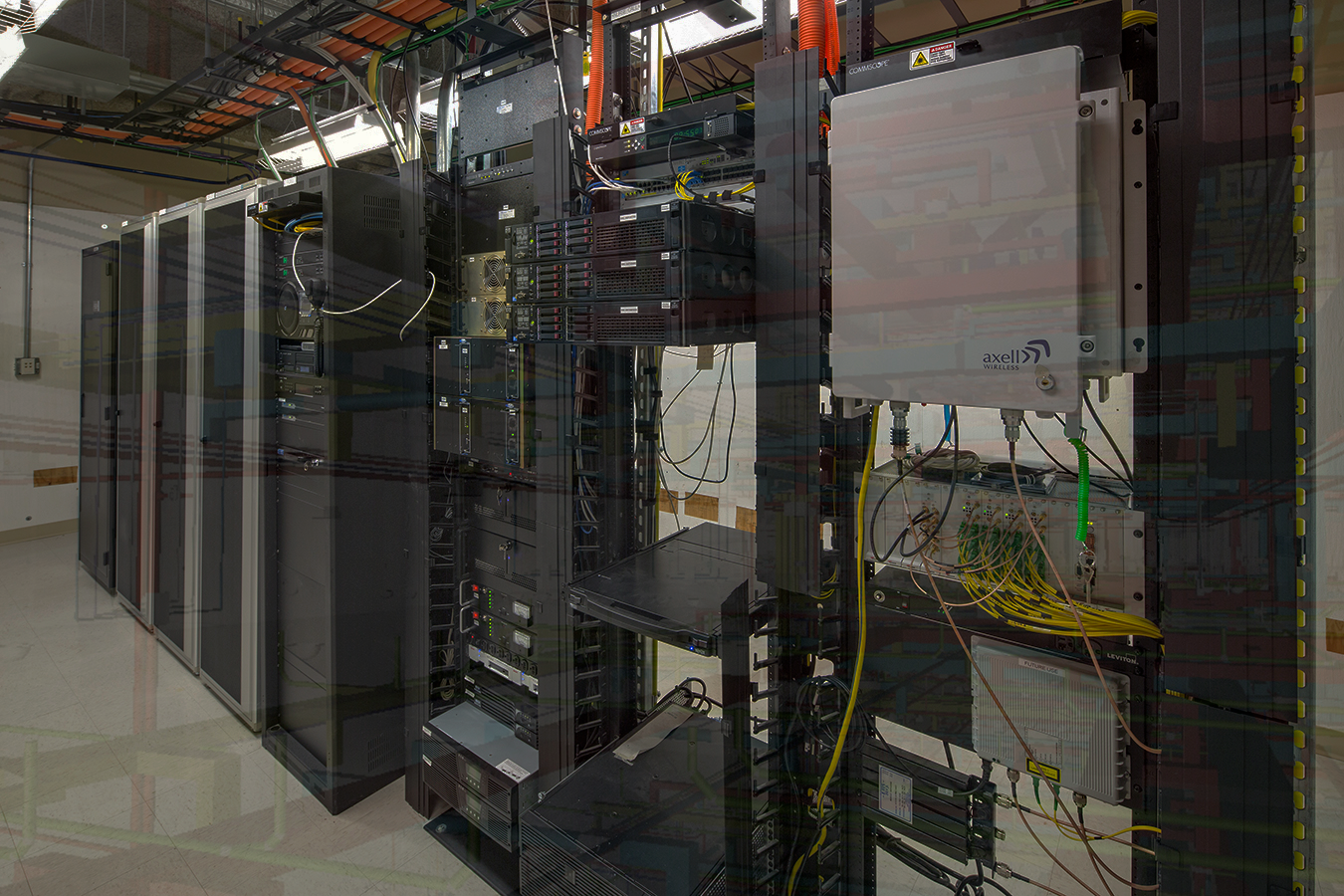
Every one of those connections lands somewhere physical. Inside a wall. Above a ceiling. Inside a telecom closet that needs to be larger than the last one we sized.
The pressure is already emerging in three specific areas:
Exam and procedure rooms. Clinical workflows now depend on integrated displays, voice capture, ambient documentation, and decision support tools running simultaneously. Headwalls, casework, and equipment booms must accommodate technologies that did not exist when current planning standards were written. Rooms sized to yesterday's clinical assumptions will feel cramped within a few years of opening.
Support spaces. Sterile processing, pharmacy automation, and lab informatics are absorbing robotics and high-density equipment that require dedicated power, cooling, and structural reinforcement. These departments are growing in technical complexity faster than they are growing in square footage, and the imbalance shows up first in renovation requests.
The infrastructure we do not see. For military and VA facilities, current planning assumptions include a 2% grossing factor from department gross to building gross, with an additional 1% for emergency power. Telecom rooms range from 140 to 170 net square feet. Mechanical systems account for 11% to 15% of building area. Private healthcare facilities follow similar benchmarks.
Those numbers are already under pressure. As energy demand rises, heat loads increase, communications systems expand, and clinical environments become more automated, these factors will continue to grow. Facilities designed to current standards risk being undersized before they reach maturity.
Planning for Long-Term Adaptability
Future-ready healthcare facilities treat infrastructure as a long-term strategic asset rather than a fixed cost. From a medical planning standpoint, this requires deliberate decisions early in the design process.
We size telecom and electrical rooms for projected load, then add capacity. We organize departments around soft spaces that can absorb new equipment or expanded workflows without major renovation. We coordinate closely with engineering teams to route conduit, cable trays, and mechanical systems for long-term access, reducing the need for disruptive ceiling demolition in active environments.
Exam and procedure rooms are planned with structural and dimensional flexibility to accommodate both known and emerging technologies.
The objective is clear. Clinical operations should be able to evolve within the same building, without forcing early reinvestment or interrupting care.
What Healthcare Leaders Should Ask Now
For projects opening in 2028 or later, the right questions are direct.
How is telecom and electrical capacity planned beyond current minimums?
Where are the soft spaces that allow departments to expand without renovation?
How will infrastructure be accessed for upgrades five and ten years after opening?
How is the equipment plan aligned with the clinical roadmap, not just the project budget?
Facilities designed only for today’s requirements will limit future technology adoption, require earlier reinvestment, and introduce operational disruption. In a competitive healthcare environment, that becomes a constraint on growth.
The next decade of healthcare technology will advance faster than most facilities can adapt through renovation alone. Organizations that plan for flexibility, infrastructure capacity, and future growth today will be better positioned to adopt new technologies, support evolving care models, and extend the useful life of their facilities. Those that do not may find themselves reinvesting sooner than expected.

